
Gazen Ergos field note
Casual Shirt Fabrics: Oxford, Chambray, Linen and Cotton Blends by Use
Choosing a casual shirt is easier when the fabric name becomes a starting point rather than a verdict. An oxford can be substantial or comparatively…
Field note published September 26, 2026.
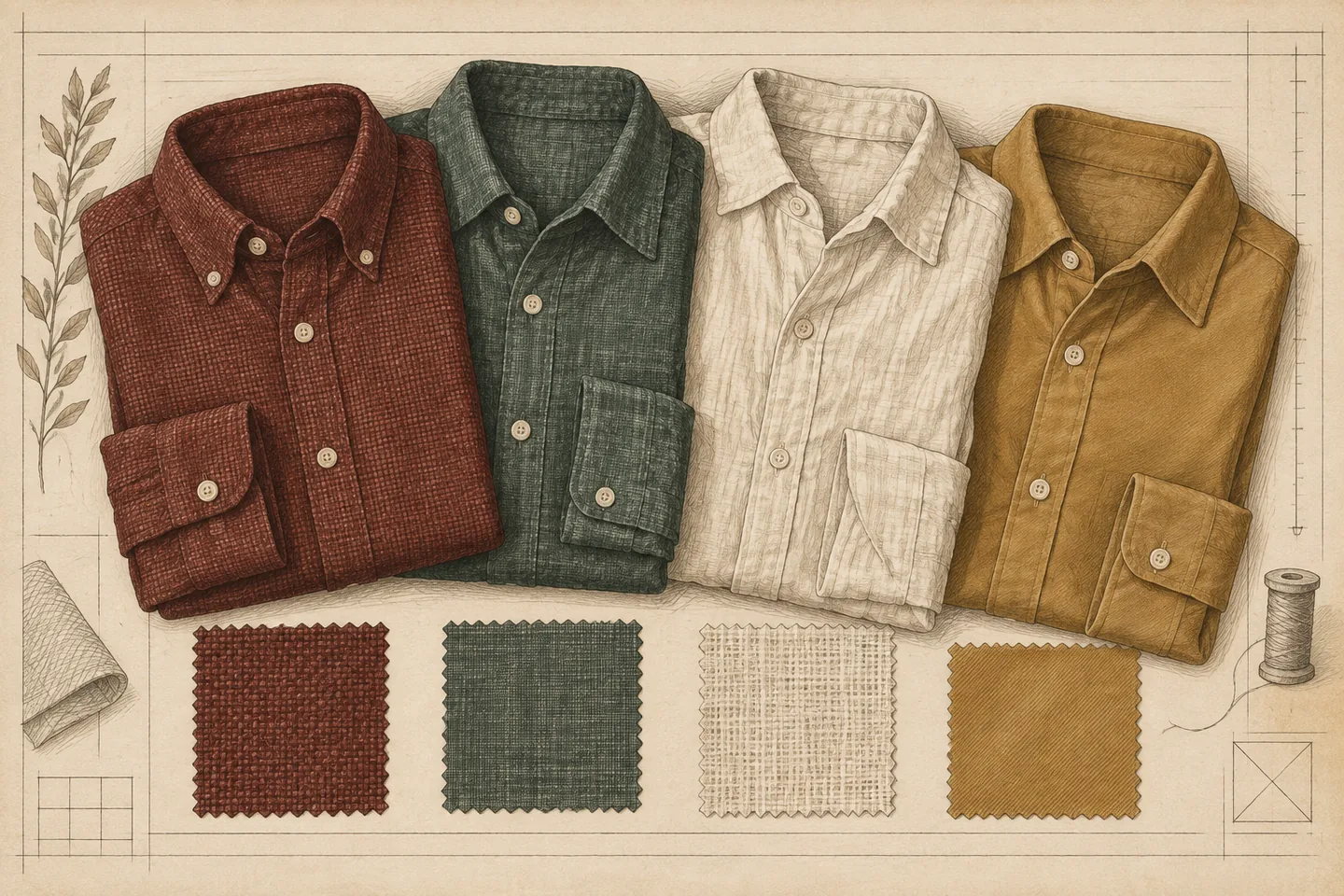
Choosing a casual shirt is easier when the fabric name becomes a starting point rather than a verdict. An oxford can be substantial or comparatively light. Chambray can feel crisp or soft. Linen can be airy or unexpectedly dense. The useful question is how a particular shirt feels, hangs, covers and holds up through the care routine you are willing to follow.
Start With Fibre, Weave and Weight
Fibre is the material spun into yarn, such as cotton or linen. Weave describes how the yarns cross to make cloth. Oxford and chambray are weave descriptions; linen is a fibre. A cotton–linen blend names its fibre content, but you still need to examine its weave and weight. Linen comes from the flax plant, as Cotton Incorporated’s textile encyclopedia explains.
Construction changes the result. Proper Cloth describes oxford as a basket weave with a more pronounced texture, while chambray uses a plain weave and commonly shows lighter threads across its width. Its shirting guide also distinguishes the heavier yarns often used for casual chambray from finer plain-weave shirting. The names identify recognizable structures, but neither specifies exactly how heavy the finished shirt will be. See its fabric construction guide for the distinctions.
Weight and density matter alongside composition. Hold two shirts made from the same fibre: one may feel compact and cover the skin beneath it, while the other lets more light through and moves more freely. A heavier fabric may give a shirt a firmer outline; a lighter one may fall closer to the body. Look at the finished garment, including its colour and cut, before deciding how suitable it will be.
Oxford: Texture and a Firmer Shape
Oxford is a useful choice when you want a casual shirt with visible texture and enough substance to keep its shape. Traditional heavier versions feel hearty and suit a relaxed appearance. Lighter and finer versions exist, however, so “oxford” alone does not promise a thick shirt. Proper Cloth distinguishes heavy casual oxford from finer pinpoint and lighter oxford constructions in its oxford cloth guide.
That range makes touch important. Rub the fabric gently between your fingers. A heavier oxford may feel textured without being harsh; a finer one may feel smoother and look neater. Check the body of the shirt as well as the collar and cuffs. A stiff collar can make a lightweight body seem more substantial on a hanger than it will feel when worn.
Oxford works well for regular wear if you accept a little rumpling. Its texture makes small creases less obvious than they are on a very smooth shirt. A particular dye, finish or construction may still call for a gentler wash or drying method. In warmer conditions, compare a lighter oxford with other lightweight shirts.
Chambray: Plain Weave, Varied Weight
Chambray offers a flatter surface than oxford, usually with a softly varied colour rather than an entirely solid-looking face. Proper Cloth describes it as a plain weave, commonly made with a lighter-coloured weft and often with yarns substantial enough for a casual or workwear character. It is structurally different from denim, which uses a twill weave.
A light chambray can be a good candidate when you want an easy shirt with less pronounced texture than oxford. A heavier one may behave more like an overshirt. Compare their weights directly: fabric that looks similar in a photograph can feel quite different in the hand. Pale versions also deserve an opacity check, particularly if you plan to wear the shirt without another layer.
Finish affects its appearance after laundering. A washed, relaxed chambray can accommodate visible creases; a crisp one may need pressing to keep that look. Read the label before assuming a cotton chambray can share another cotton shirt’s wash and tumble-dryer settings.
Linen: A Dry Hand and Visible Creases
Linen has a distinct dry feel and an easy drape that can make a casual shirt pleasant to wear with room through the body. It also creases readily. Proper Cloth notes that linen shirting is often more loosely woven and more sheer than many cotton fabrics, while cotton–linen blends may reduce some wrinkling. Those are tendencies, not guarantees for every shirt. Its linen comparison sets out the trade-off.
Judge linen by holding it up to light, then by trying it on. A pale, open cloth may reveal an undershirt or the line of a pocket. A denser linen may provide more coverage but feel less light. Ask whether you like the shirt after it has developed creases at the elbows and waist, because that is a more realistic view of its appearance than a freshly pressed display.
Do not assume linen will always feel coolest. Comfort also depends on cloth weight, weave, fit and conditions. A close-fitting linen shirt can feel less comfortable than a roomier shirt made from another fabric. Choose it for its texture, movement and relaxed appearance if you welcome the creases.
What Cotton Blends Change
“Cotton blend” needs a second question: blended with what? Cotton–linen keeps some of linen’s character, but its look and creasing still depend on the proportions and construction. A cotton blend containing a manufactured fibre is a different proposition. The fibre list tells you what is present; touching and wearing the shirt show how that combination works as a garment.
A blend is worth considering when pure linen creases more than you like or a heavy all-cotton shirt feels too substantial. “Blend” does not guarantee easy care or less creasing: finishes, weave and weight matter too. Compare it beside the pure-fibre shirt it might replace, then check both care labels.
When you cannot handle the shirt before choosing, look for the full fibre composition and close views of the fabric rather than relying on a label such as “lightweight”. If a fabric weight is given, use it to compare similar shirts, then consider the cut and lining or pocket details shown in the garment photographs. A description cannot settle how cloth feels against your skin, so keep expectations modest until you can try the shirt on.
A Four-Part Checklist for One Shirt
- Touch: Feel the fabric at the torso, not only at the cuff. Is it pleasant against your neck and arms? Does it fold easily, or does it keep a more structured shape? Lightly crease a discreet area in your hand and release it to see whether the result suits the appearance you want.
- Opacity: Hold the shirt toward a light source and place your hand behind the cloth. Then try it on over what you would normally wear beneath it. A pocket, undershirt or skin tone can show differently once the fabric is stretched across the body.
- Fit: Button the shirt and reach forward, sit down and raise your arms. Check for pulling across the upper back, chest and buttons. Leave enough room for the cloth to move; buying extra width solely to offset a clingy fabric can leave the shoulders and collar poorly fitted.
- Care label: Read the washing or dry-cleaning method, drying directions, ironing guidance and warnings before buying. If the instructions demand a routine you will not follow, choose another shirt. The FTC outlines the information and warnings care labels provide.
If a shirt feels comfortable but turns sheer when worn, try a denser fabric. If it pulls across the back, try another cut. If its label conflicts with your laundry routine, keep looking.
Continue with these wardrobe notes
How to Choose Casual Pants When the Waist Fits but the Thighs Do Not