
Gazen Ergos field note
Build a Men’s Capsule Wardrobe from Clothes You Already Own
A useful capsule wardrobe begins with a calendar, not a shopping list. The aim is to have clothes that work together often enough to cover your actual…
Field note published September 26, 2026.
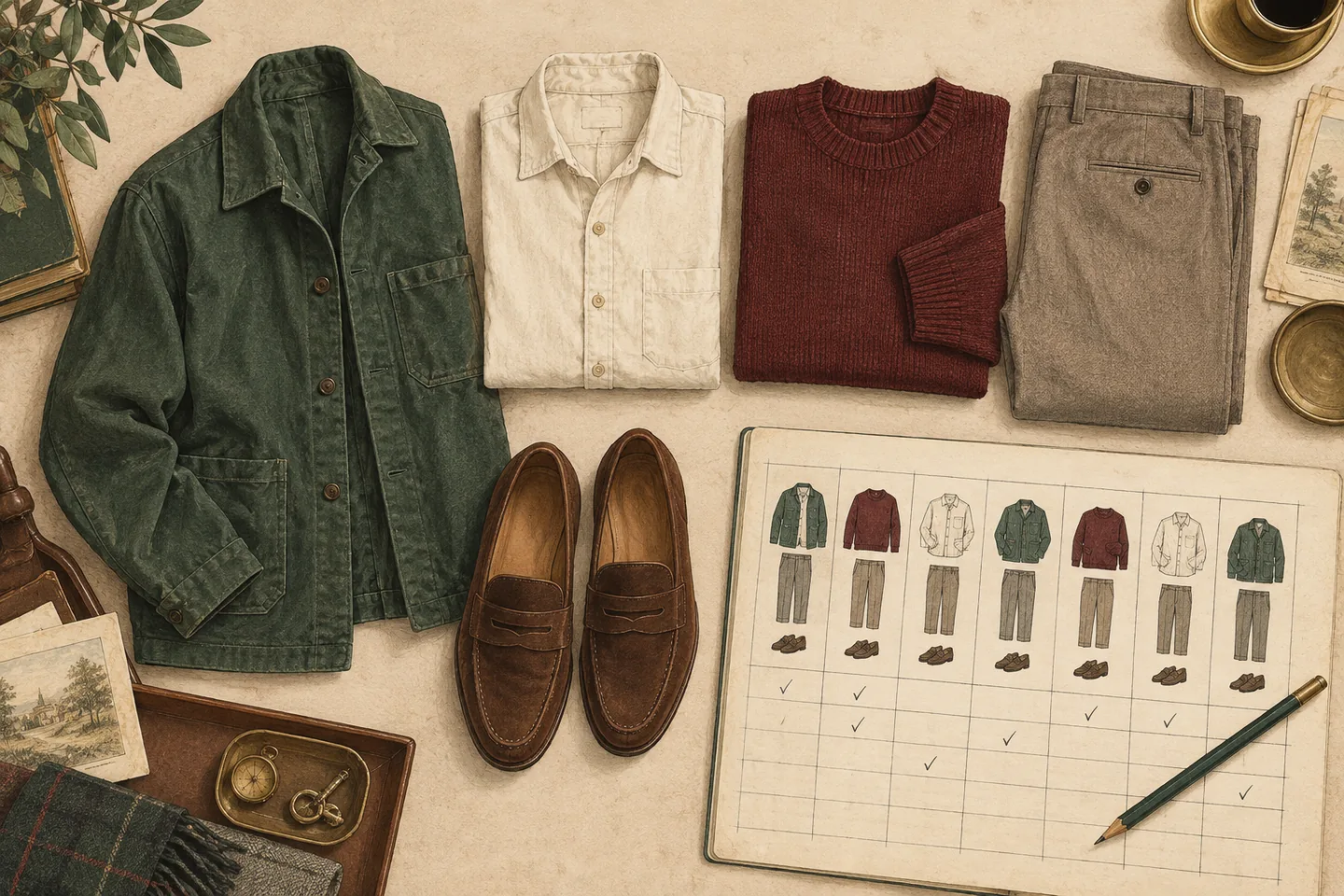
A useful capsule wardrobe begins with a calendar, not a shopping list. The aim is to have clothes that work together often enough to cover your actual week. A man who works from home, walks outdoors daily and attends one formal event a year needs a different mix from someone who wears a jacket to work. Neither needs to meet a universal item count.
Start with the week you dress for
Write down a normal week before opening the wardrobe. Include workdays, travel, exercise, social plans and time spent at home. Note any dress code, weather exposure or activity that changes what you can wear. A tidy outfit that cannot handle your commute is not a working outfit, however good it looks in the mirror.
Next, record how often you actually do laundry. Include the time garments spend drying, being pressed or waiting for specialist care. If you wash clothes every Sunday, an outfit worn late in the week may need different clean pieces from one worn on Monday. Count wearable garments, not everything hanging in the closet.
Use these notes to define requirements rather than an ideal number of shirts or trousers. For example, three office days may call for three presentable combinations, but those combinations need not use three separate jackets. A daily walk in wet weather may require dependable outerwear and footwear even if they appear in nearly every outfit. The point is coverage across your schedule, with enough breathing room for laundry and unexpected changes.
This approach is consistent with the wardrobe-planning exercise in a university extension life-skills booklet, which recommends taking an inventory, considering work and lifestyle, and making a list of actual needs before buying. Its illustrated outfit totals are possibilities, not proof that every combination will suit your own week.
Audit what is ready to wear
Bring together the clothes you reach for across the current season: tops, trousers, layers, outerwear and shoes. Look in laundry baskets, storage boxes and the back of the closet as well as on the main rail. Leave rarely used formalwear and clothes for another season aside for now; you will assess those separately.
Give each item one of four marks: ready, needs care, needs repair or alteration, or does not work for me. “Ready” means that it fits, is in good condition and can be worn for at least one real activity. A shirt with a missing button is not ready merely because the repair is small. A pair of trousers that feels restrictive when you sit should not be counted because the waist looks right on a hanger.
Try on doubtful pieces with the shoes and layers you would actually wear. Walk, sit and reach. Check whether a jacket closes comfortably over a knit, whether a shirt stays where you want it, and whether trouser hems work with your everyday shoes. Record the specific problem rather than writing “bad fit.” The distinction matters: a hem that needs shortening is a different decision from a jacket that pulls across the shoulders.
Size labels offer limited help during this audit. Even within one maker’s range, dress shirts, casual shirts, jackets and trousers may use different size systems and fit choices; Proper Cloth’s size guide illustrates those differences and distinguishes garment measurements from body measurements. Judge the clothes on your body and in motion before deciding that you own a usable duplicate—or that you need to buy one.
Photograph outfits, then look for missing combinations
Make a small set of complete outfits for the activities on your calendar. Start with combinations you already wear. Photograph each one in ordinary light, including the shoes and any outer layer needed outside. Label the image by purpose—“office and train,” “weekend errands,” or “informal dinner”—rather than by whether it looks like a capsule wardrobe.
Now change one piece at a time. Could the trousers work with another shirt you own? Does the same overshirt make sense over a different top? Can one pair of shoes serve two activities without looking out of place or wearing badly in the conditions? Take a second photograph only when the new combination feels comfortable and suits a real occasion. A theoretical match between colours is less useful than an outfit you would willingly put on tomorrow.
When a combination fails, identify the constraint. Is the colour awkward, the fit uncomfortable, the shoe unsuitable, or the whole outfit too formal for the event? Try another piece already in the closet before calling it a gap. The exercise should produce a set of usable outfits, not the largest possible number of photographed variations.
Run a care and laundry check
An outfit counts only if its parts are likely to be available when you need them. Read the care labels on the garments you plan to wear often, especially pieces you have avoided washing because you were unsure how to handle them. The Federal Trade Commission’s care-label guidance explains that garment labels provide instructions for regular care, including washing, drying and relevant warnings. Use the instructions on each garment rather than assuming that similar-looking fabrics need identical treatment.
Mark a piece as conditional if its care does not fit your routine. A shirt that must be pressed may be perfectly useful if you regularly press shirts. If you do not, it should not carry the plan for a rushed weekday. The same applies to a layer that takes longer to dry than the interval between wears. This is a planning decision, not a reason to discard the garment.
Lay your outfit photos against the days before the next wash. If the same top appears on Monday and Thursday, decide whether you would rewear it or have time to clean it. If the answer is no, substitute another owned top and photograph that outfit. The test turns a collection of attractive combinations into a wardrobe that can get through the week.
Test an ordinary week without buying anything
Write out your next typical week. For each day, list a complete outfit from owned clothes, including shoes and any outer layer. Note the activity, dress code, weather and whether every piece will be ready after laundry. Use names you will recognise, such as “navy Oxford shirt” or “dark straight jeans”.
- Mark any garment needed twice before you could clean or comfortably rewear it.
- Try an owned substitute in one of those outfits and check the fit and formality again.
- Repeat the exercise for a week with different weather or an occasional event.
There is no target for how few items you use. The result should be outfits that suit your activities and are available on the assigned days. If one day still fails, note the exact reason—such as “no comfortable trousers for Thursday’s dress code”—rather than writing “need more basics”.
Make a replacement-only shopping list
Wait until the worksheet exposes a repeated problem before writing a shopping list. First check whether care, repair or alteration can return an owned item to use. Then look for an overlooked substitute in the same category. Only after those checks should a gap become a proposed replacement.
Describe the function of the missing item, not a trend or a generic “capsule essential.” Write “comfortable trousers that work with my two office shirts and walking shoes,” for instance, rather than “new chinos.” Note which owned outfits the replacement must complete, what fit problem it must solve and how its care must fit your routine. If the proposed item cannot satisfy those conditions, it is unlikely to fix the gap you measured.
Keep seasonal and formal clothes as explicit exceptions. A warm coat may have little use in the current worksheet but be indispensable later in the year. A suit worn occasionally need not mix into every casual outfit to deserve its place. Check that exception pieces fit and are ready before their season or event; do not count them as everyday coverage, and do not discard them simply because they are seldom worn.
Revisit the photos and weekly plan when your schedule, climate or fit changes.
Continue with these wardrobe notes
How to Choose Casual Pants When the Waist Fits but the Thighs Do Not
Casual Shirt Fabrics: Oxford, Chambray, Linen and Cotton Blends by Use