
Gazen Ergos field note
How to Choose Casual Pants When the Waist Fits but the Thighs Do Not
A waistband can feel exactly right while the seat pulls and the thighs feel trapped. That does not mean you need a larger waist. It means the pants have…
Field note published September 26, 2026.
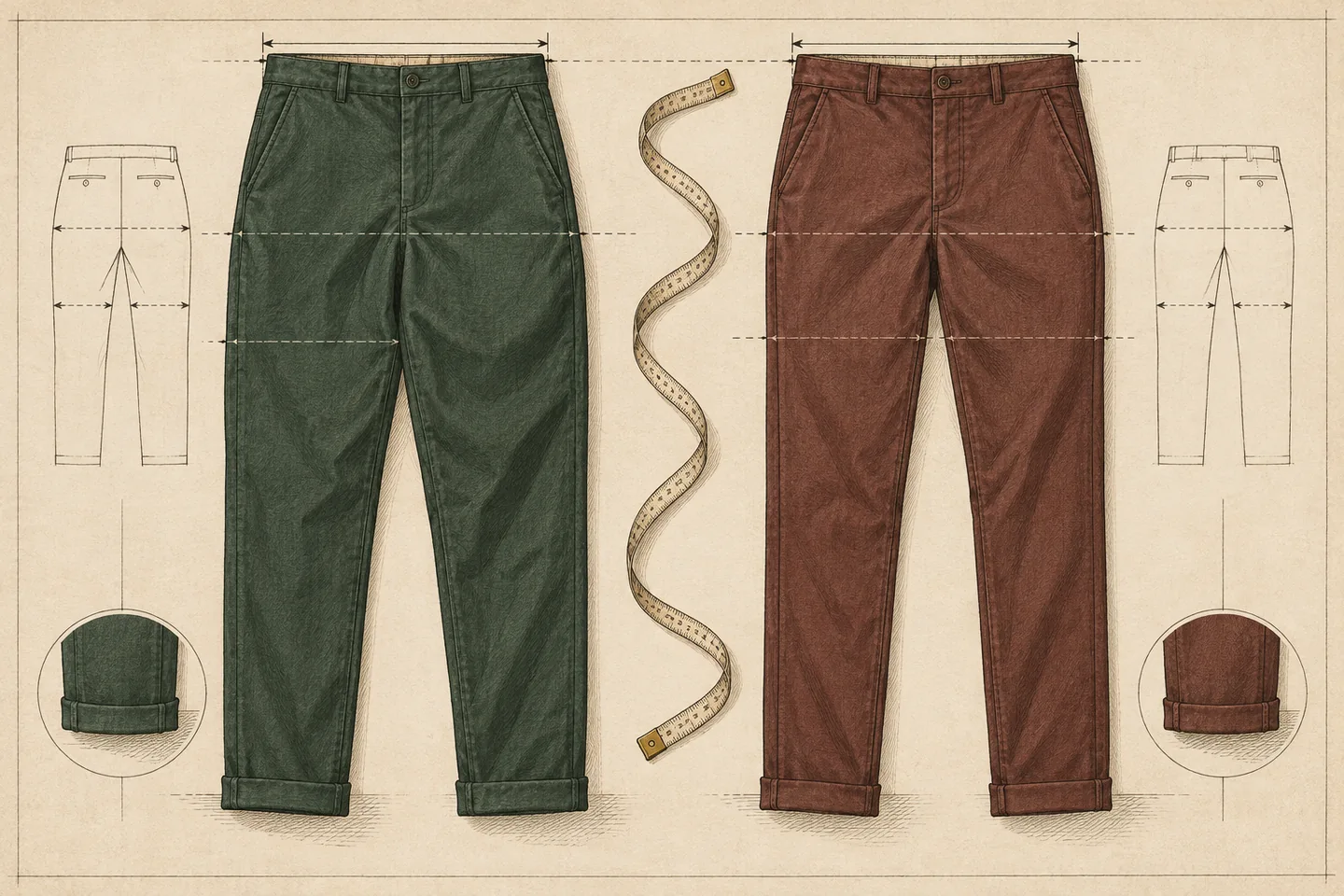
A waistband can feel exactly right while the seat pulls and the thighs feel trapped. That does not mean you need a larger waist. It means the pants have enough room at one point and too little at another. The useful question is where the fit changes: at the seat, the upper thigh, the rise, or farther down the leg.
Begin with a pair that works
Choose pants you wear for an ordinary day without repeatedly adjusting them. They need not look perfect at the hem. What matters is that the waistband stays where you want it, the seat does not pull, and the thighs allow a normal stride. Wash and wear them as you usually would before taking measurements; a freshly worn pair may sit differently from one just taken off a hanger.
Button and zip the pants, lay them on a flat surface, and smooth the fabric without stretching it. Record the width across the waistband. Then measure across the seat at a consistent distance below the waistband and across one upper leg just below the crotch. Measure the front rise from the top of the waistband to the crotch seam; the back rise runs from the back waistband to that seam. Finally, note the inseam and leg opening. Proper Cloth’s garment-measurement guide shows these as distinct measurements and explains where to place the tape.
Write down where you measured, not just the numbers. A seat measurement taken higher on one pair than another can suggest a difference that is mostly technique. Measure each pair with the same method and keep the tape flat. If your comfortable pants have changed shape through wear, the numbers are a starting reference, not a specification that a new pair must match exactly.
Read the size chart as garment dimensions
A labelled waist size does not tell you how much room a cut provides through the seat or legs. Look for a garment size chart that includes hip or seat width, thigh width, and rise. Compare those measurements with your comfortable pair at the same labelled size, then check the next size only if necessary.
Be careful with the word “width.” On some charts, it means the distance across a garment laid flat, rather than a measurement around your body. Proper Cloth, for example, lists pant waist, hip, thigh, knee, and opening widths this way; doubling a flat width gives the garment’s approximate circumference at that point. Its size-chart explanation makes the distinction explicit. Check each retailer’s measuring instructions before comparing figures, since the point and method used may differ. If a chart gives body measurements instead, compare them with your body rather than doubling them.
If the chart gives only waist and inseam, it cannot settle a seat or thigh problem. Use it to narrow the pairs worth trying, then let the fitting room answer the remaining questions. When shopping online, compare the listed dimensions with pants you own and check the return conditions before relying on a new cut name.
Choose the upper shape before the lower silhouette
Fit names are clues, not measurements. “Straight” usually describes how little the leg narrows toward the hem; it does not promise a generous seat. “Tapered” describes a leg that becomes narrower below the thigh, but it may begin with a close or roomy upper section. An “athletic” cut often aims to add space through the seat and thighs while retaining a narrower lower leg. Proper Cloth’s casual-pant fit descriptions illustrate the distinction: its straight cut has little leg taper, while its athletic cut adds room above the knee. Other makers may use the same names differently.
Start by finding enough room at the hips and upper thighs. If a straight pair pinches there, a wider hem will not repair it. If an athletic pair feels comfortable above the knee but seems too narrow at the calf, the taper is the problem. If a tapered pair works throughout the upper leg and knee, there is no reason to reject it simply because the name sounds slim.
Compare pairs in this order: waistband position, seat, upper thigh, rise, knee, then hem. Hold the waistband at the height where you intend to wear it. A pair pulled lower to escape crotch pressure may appear to fit at the waist while creating new pulling across the seat. Likewise, excess fabric below the seat may signal a different rise or shape, rather than a need for a smaller waist.
Use movement to locate the problem
Stand naturally and look at the front, side, and back. The fly should lie without strain, and the fabric across the seat should not form sharp pulling lines. Then sit in an ordinary chair, stand, and walk several steps at your normal pace. The upper leg needs to accommodate the change in position without forcing the waistband down or making you shorten your stride. Proper Cloth’s casual-pant fit guide likewise recommends checking thigh comfort while sitting or squatting and evaluating the rise alongside the seat.
Use the location of the pressure to guide the next pair you try:
- Waist comfortable; seat pulls: compare a cut with more hip or seat room at the same waist size. Check the back rise as well.
- Seat comfortable; upper thighs grip: look for more thigh width. A different taper below the knee alone will not solve it.
- Front crotch or back seam presses when seated: compare the rise and where the waistband sits before changing waist size.
- Upper leg comfortable; knee or calf catches while walking: keep the successful upper fit and try a less aggressive lower-leg taper.
- Pants slip unless tightly belted: the waist or its intended wearing position may be wrong, even if the legs feel good.
Separate a length problem from a size problem
Long hems can make otherwise suitable pants look too large. Before sizing down, fold the excess length inward to approximate a shorter hem and look at the upper half again. If the waistband stays put, the seat is smooth, and sitting and walking remain comfortable, hemming may address the visible problem. Shortening the leg changes where it ends; it does not reduce the space you need at the thigh.
The reverse is also true. A larger waist size may give your thighs enough room, but it can leave the waistband loose and shift the whole garment downward. Before accepting that trade-off, try another cut in your original waist size. If you consider alterations, ask a tailor to assess the actual pair. Taking up a hem is a different task from creating substantial room through a tight seat or thigh.
Use the same waistband position and similar clothing each time you try a pair. Note the cut and what failed, even if you buy nothing. “Waist right, seat tight” tells you to seek a different upper shape rather than increasing every dimension.
Allow for fabric, but do not depend on it
Fabric can change how a close fit feels. A little give may make sitting easier, while firmer cloth may reveal pressure. Wear can alter dimensions, and pairs with the same label need not feel identical. Check the pair in hand. Do not buy pants that restrict you in the fitting room on the assumption that they will stretch enough later.
Continue with these wardrobe notes
Casual Shirt Fabrics: Oxford, Chambray, Linen and Cotton Blends by Use