
Gazen Ergos field note
Men’s Fashion Trends: A Practical Wardrobe Guide
By Milan Petrov
Men’s fashion trends can offer useful ideas about proportion, fabric and colour without dictating what you wear. A wider trouser, softer jacket or differen
Field note published September 7, 2026.
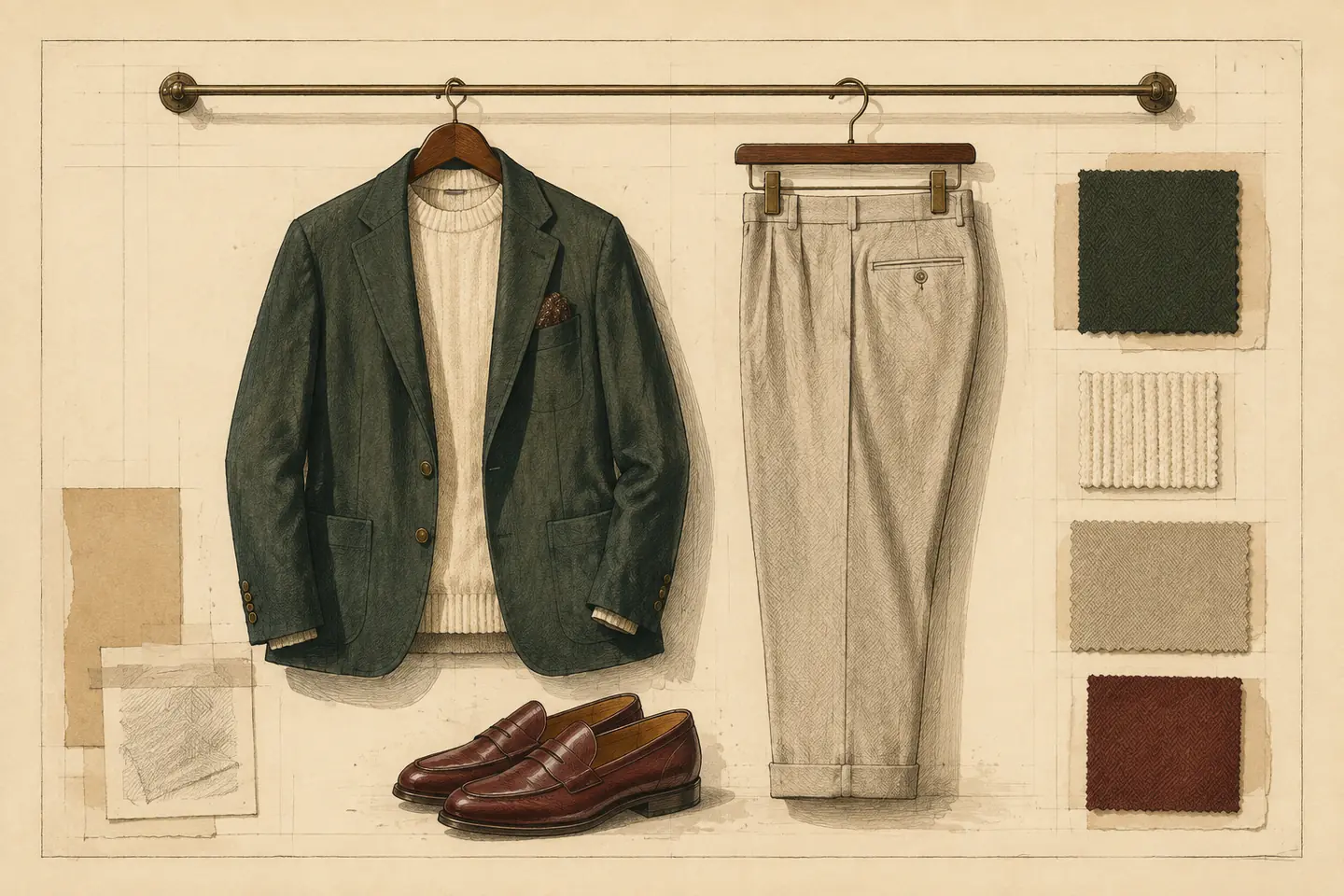
Men’s fashion trends can offer useful ideas about proportion, fabric and colour without dictating what you wear. A wider trouser, softer jacket or different shoe can change familiar clothes. The useful question is whether that change suits your routine and works with what you own.
Start with a specific need: more room to move, a layer for changeable weather or clothes that work across casual and smarter settings. Treat photographs as references for shape and combinations. You do not need to reproduce a complete outfit to borrow one useful idea.
Get the fit right before changing the style
Fit is about how a garment behaves, not simply how closely it follows your body. A relaxed shirt should allow movement without pulling across the chest. Trousers should stay comfortable when you sit, and a jacket should close without straining. Deliberately dropped shoulders are different from a shoulder seam that sits awkwardly because the size is wrong.
If you usually wear slim trousers, try a straight leg before an extremely wide cut. Keep your familiar shirt and shoes for the first comparison. Changing one element makes it easier to see whether the new proportion works, or whether the trouser length needs adjusting.
Check hems with the footwear you intend to wear. Fabric that pools over the shoe creates a different outline from a hem that barely touches it. Neither effect needs a trend label, but dragging hems are impractical. Turn up excess length temporarily before deciding on alterations.
Use utility clothing without overloading an outfit
Cargo trousers, overshirts and field jackets offer pockets and room for layering. Choose these details for how you use them. A chest pocket that cannot comfortably hold anything may add visual interest, but it should not determine whether the garment meets your practical needs.
Balance a heavily detailed piece with simpler clothes. Try cargo trousers with a plain jumper, or a workwear jacket over an unpatterned shirt. Combining large pockets, prominent fastenings and several bulky layers can leave little space for any one feature to stand out.
Olive, stone, navy and brown are starting points, not a required palette. Pick a shade already represented in your wardrobe, then check the fabric. Stiff cloth may hold its shape well but feel restrictive when seated; a softer weave may be easier for everyday movement. Try the pockets with your usual belongings rather than judging them empty.
Make tailoring work with casual clothes
A tailored jacket can work with denim or knitwear when the textures and proportions feel compatible. A soft shoulder and textured cloth offer one route into less formal dressing. Smooth, sharply structured tailoring may need more careful coordination with casual pieces.
The AP’s report on Paris men’s fashion week provides examples of altered proportions and mixed materials in tailoring. For everyday use, translate those ideas into a simple pairing: wool trousers with a brushed overshirt, or a jacket over a fine knit.
Check the layers together. A jumper that fits alone may bunch beneath narrow jacket sleeves. A shirt collar should sit comfortably inside the neckline, and the jacket should still move freely when fastened. Try sitting and reaching forward rather than assessing the combination only in a mirror.
Before splitting a suit, check whether its pieces look complete separately. Very smooth matching cloth can make an isolated jacket harder to combine. Wearing one half much more often also means the two pieces may receive different amounts of wear and cleaning.
Add colour through one manageable change
Introduce an unfamiliar colour in a piece you can combine with existing clothes. An olive jumper with blue denim or a brown overshirt with navy trousers gives you a clear starting point. There is no need to add several new colours at once.
Look at the whole outfit in daylight. Close shades can work together, but a pale beige shirt and cream trousers may look different under indoor lighting. If the combination feels indistinct, try a darker shoe, belt or outer layer to create a clearer boundary.
Texture gives related colours separation. Corduroy trousers, a knitted jumper and a smooth cotton shirt need not contrast sharply to look distinct. If colour matching becomes difficult, return to two main colours and let the materials supply the variation.
Choose denim, knitwear and coats for repeated use
With jeans, assess the rise as well as the leg width. A comfortable waistband position affects how a tucked shirt sits and how much room you have when seated. Walk and bend in them; a convincing standing fit does not tell you everything.
Use knitwear thickness to decide its role. A fine knit can fit beneath tailoring, while a substantial cardigan can serve as an outer layer indoors. Check the hem over your usual trousers. If it catches at the waistband or rides up repeatedly, try a different length or cut.
A coat needs space for the layers you actually wear. Try it over your thickest intended jumper, fasten it and reach forward. Check sleeve coverage and whether the pockets remain accessible. For a walking commute, consider stride length and how the coat feels when carrying a bag.
The same AP coverage highlights coats combining classic and sportier elements. You can borrow that approach by pairing a simple coat with casual layers, while choosing its weight and construction around your weather and travel needs.
Use accessories to solve a specific problem
A bag, belt or scarf can change an outfit while doing a useful job. Start there: enough carrying space, a secure waistband or warmth around the neck. Check a bag strap over your coat and make sure a belt passes comfortably through the trouser loops.
Footwear changes the balance of trousers. Compare a wider leg with both a substantial shoe and a slimmer one before deciding. Check the view from the side as well as the front; the hem may catch on one pair and fall cleanly over another.
If you add jewellery, a patterned scarf or a prominent buckle, assess it with your everyday accessories. Glasses, a watch and a bag already contribute detail. You may only need one addition to achieve the effect you want.
Understand the references you borrow
Clothing can express belonging, independence and memory as well as taste. The history of Black dandyism offers an example of tailoring carrying cultural meaning. That history is a reminder that style should not be reduced to a checklist of purchases.
When an outfit draws on a particular community or tradition, learn about its context. Identify what interests you: the colour combination, silhouette or craftsmanship. Understanding the reference helps you make considered choices instead of copying a photograph without knowing what its details signify.
Test an addition before committing
- Identify the gap. Name the occasion or practical problem your existing clothes do not cover. Separate that need from simply wanting a different look.
- Build three combinations. Pair the proposed addition with clothes and shoes you own. Include the outer layer you would wear outside.
- Check movement and care. Sit, walk and raise your arms. Read the care label and decide whether the maintenance fits your routine.
- Compare with an adjustment. Try a different tuck, layer or trouser hem on existing clothes. You may find the change you wanted without another purchase.