
Gazen Ergos field note
Men’s Summer Fashion: A Practical Guide
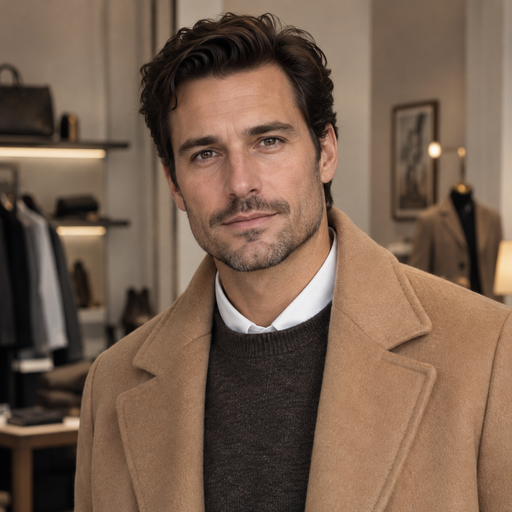
By Milan Petrov
A useful summer wardrobe keeps you comfortable without making every outfit look like beachwear. The key is to choose breathable fabrics, allow enough room
Field note published August 14, 2026.
A useful summer wardrobe keeps you comfortable without making every outfit look like beachwear. The key is to choose breathable fabrics, allow enough room for air to move, and own a small set of clothes that can shift between casual days, work and evening plans.
Start with the conditions you actually face. A dry, hot commute calls for different clothes from a humid holiday or an air-conditioned office. Dress codes matter too. Build around your normal week, then add specialist pieces only when a real occasion requires them.
Choose Fabrics for the Conditions
Fabric weight and construction often matter more than the fibre name alone. Hold a garment up to the light: an open weave usually allows more air through than a dense one. A light cotton poplin shirt, for example, can feel cooler than a thick cotton jersey top.
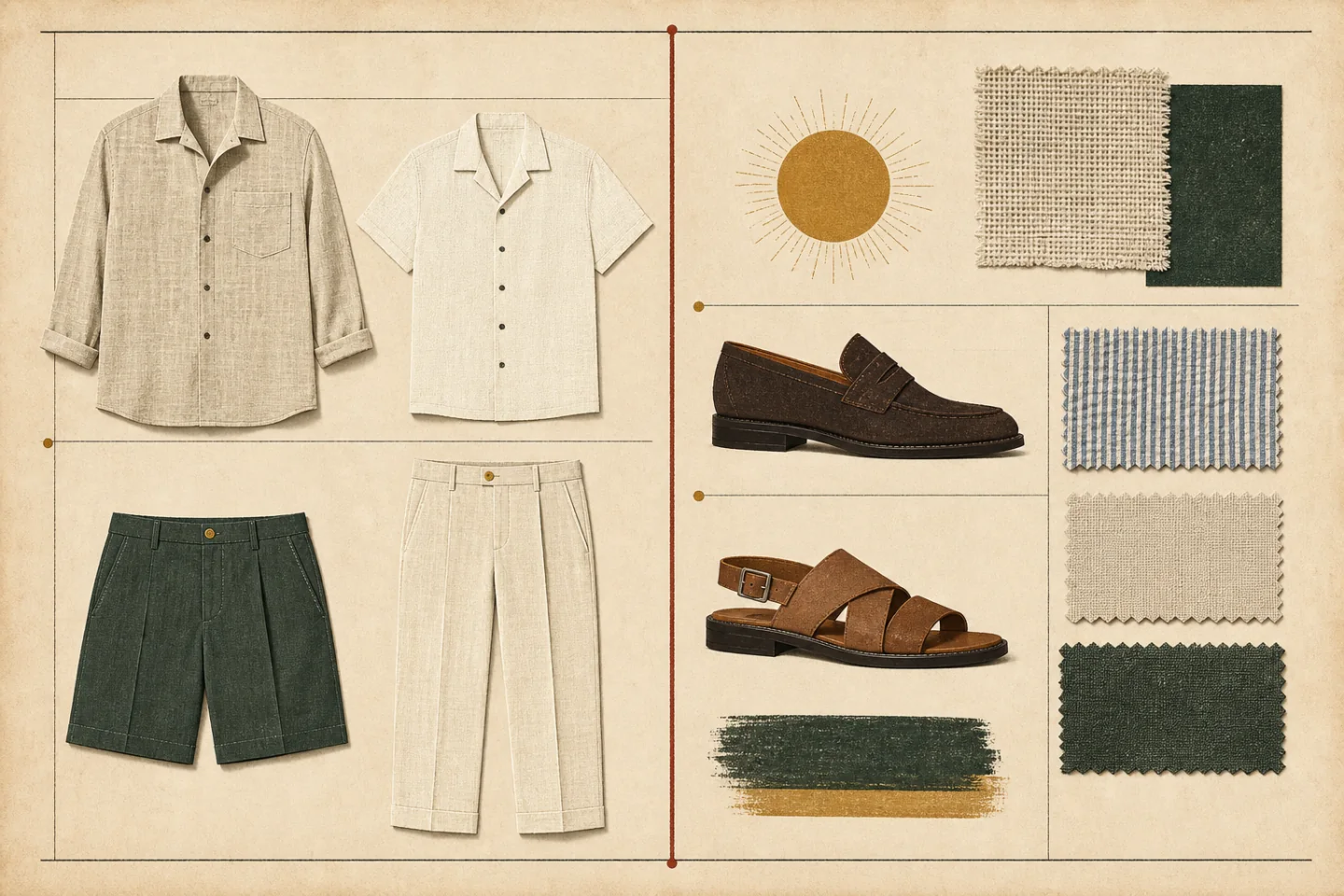
Linen is a reliable choice for shirts, overshirts and relaxed trousers because it feels light and does not need to look perfectly pressed. Linen clothing for men works best when the cut leaves space around the torso and legs. If you dislike heavy creasing, look for a linen and cotton blend and follow its care label.
Cotton poplin, seersucker and lightweight chambray are useful alternatives. Fine merino can work for smart trousers or a thin knit, although it needs gentler care. Some technical fabrics dry quickly and suit travel or exercise, but check the garment rather than assuming every synthetic material will perform alike.
Before buying, examine the lining as well as the outer cloth. A light jacket with a dense full lining may feel warmer than expected. An unlined or partly lined construction is usually easier to wear in heat, provided the seams and fabric are comfortable against the skin.
Build a Small, Flexible Wardrobe
A men’s summer capsule wardrobe should reflect how often you do laundry and how formal your routine is. The following foundation covers many ordinary situations without prescribing an exact shopping list:
- Plain T-shirts in white, navy, grey or another neutral you already wear.
- One light long-sleeved shirt and one short-sleeved shirt or knitted polo.
- Tailored shorts that do not pull across the seat or thigh.
- Light trousers in navy, stone, olive or mid-grey.
- An unlined overshirt or jacket for evenings and cool interiors.
- One casual pair of shoes and one smarter pair.
Choose colours that work with your existing shoes and belts. Navy, stone, white, olive and muted blue combine easily, but there is no need to replace colours that already suit you. A practical test is whether each new top works with at least two existing bottoms.
Texture can provide interest when the palette is restrained. Seersucker, a knitted polo, an open-weave shirt or soft suede introduces contrast without a loud print. The familiar combination of linen, airy cotton, and easy tailoring is useful because each element can be dressed up or down.
Get the Fit Right
Summer clothes should skim rather than grip the body. Extra room across the chest, upper back and thighs improves movement and helps prevent damp fabric clinging to the skin. Oversized clothes are not automatically cooler, however; too much material can fold over itself and feel cumbersome.
Shirts and Tops
The shoulder seam of a conventional shirt should sit close to the end of your shoulder, with enough room to reach forward without pulling across the back. Short sleeves normally look balanced when they finish around mid-bicep and do not flare sharply. An untucked shirt should cover the waistband without extending so far that it resembles a tunic.
For a relaxed camp-collar shirt, a slightly dropped shoulder is part of the shape. Keep the rest of the outfit cleaner: straight trousers, simple shorts and understated footwear prevent the loose shirt from looking accidental.
Shorts and Trousers
Shorts ending above the kneecap suit most casual settings. The best length depends on your height, leg shape and comfort, so judge the whole silhouette rather than following a fixed inseam rule. Check the side view as well as the front: pockets should lie flat and the hem should not pull upwards.
Choose straight or gently tapered trousers with space through the thigh. A slight break or no break above the shoe keeps lightweight fabric from pooling. Drawstring waists can look neat when the cord is concealed or tonal, while elasticated sports styles are better reserved for genuinely casual use.
Use Colour and Pattern with Restraint
Light neutrals feel appropriate in summer, but a wardrobe does not have to be pale from head to toe. Dark navy, brown and olive remain useful, especially for trousers and evening clothes. Contrast also helps: a pale shirt with darker trousers often looks sharper than several nearly identical beige pieces.
If you wear a print, make it the main visual feature. Pair a striped or small floral shirt with plain shorts or trousers, then repeat one of the print’s quieter colours elsewhere. When pattern feels too bold, use texture instead. Avoid rules that claim a particular motif only suits one body type; scale, contrast and personal preference matter more.
Match Footwear to the Setting
Canvas trainers, simple leather trainers and supportive sandals cover informal days. Espadrilles can work for dry, relaxed settings, but their soles are less suitable for prolonged wet weather. Flip-flops belong at pools, showers and beaches rather than places where secure footing or a smarter appearance is expected.
For offices, dinners and celebrations, loafers or lightweight derbies pair well with chinos, tailored trousers and summer suits. A low-profile leather trainer may suit a relaxed dress code, but it is not a universal substitute for a formal shoe. If an invitation is unclear, ask the host rather than guessing.
Closed shoes are often more comfortable with thin socks. No-show socks preserve a bare-ankle appearance, while lightweight crew socks can look deliberate with trousers. Whatever the style, rotate shoes between wears so the lining can dry, and clean dust or salt marks before they settle.
Dress for Common Summer Occasions
Casual Days
Combine a plain T-shirt or open-collar shirt with tailored shorts and comfortable trainers or sandals. For a second light layer, wear an open overshirt rather than a heavy jacket. Carry the layer when it is not needed instead of tying it tightly around the waist.
Work
Use the lightest version of the clothes your workplace already accepts. A poplin shirt with straight chinos and loafers is a dependable smart-casual combination. Where a jacket is required, choose an unlined or partly lined one with enough room through the shoulders. Keep a spare shirt at work if the commute is hot.
Weddings and Evening Events
Respect the stated dress code. A lightweight suit in navy, grey, muted blue or tan is adaptable, while a long-sleeved cotton or linen-blend shirt remains neater than a casual short-sleeved shirt. Have trousers hemmed for the shoes you plan to wear, and test the complete outfit before the event.
Layer Without Trapping Heat
Good summer layers are light, removable and useful. An overshirt can add pockets and structure; a thin wind-resistant layer can help near water; an unlined jacket can meet a dress code. Avoid stacking several loose layers simply for appearance, as the extra fabric defeats the purpose.
Keep the base layer smooth enough for the outer garment to move over it. When entering heavily cooled buildings, add the layer before you feel cold. A breathable hat can provide shade outdoors, and sunglasses should state that they offer appropriate ultraviolet protection rather than relying on lens darkness alone.
Care for Summer Clothes
Read each care label before washing. Similar-looking linen, cotton and wool garments may have different finishes, dyes or construction. Treat sunscreen, food and perspiration marks promptly, using a method suitable for the fabric. Test any stain treatment on an inconspicuous area first.
Wash colours separately when necessary, avoid overloading the machine and reshape light garments before air-drying. High heat can shrink some fibres and set creases or stains. Knitted polos and T-shirts are usually better folded than hung for long periods because hangers can distort their shoulders.
At the end of the season, clean clothes before storing them in a dry, dark place. Use breathable covers for tailored garments and leave enough space for air to circulate. The National Park Service Museum Handbook provides deeper reference material on the care of stored collections, although everyday clothing should still be handled according to its own label.
A strong summer wardrobe is not a collection of seasonal novelties. It is a compact set of breathable, well-fitting clothes matched to your climate, routine and dress codes. Review what you already own, identify the genuine gaps, and choose additions that work in several combinations.