
Gazen Ergos field note
Finding Men’s Clothing Nearby: A Practical Shopping Guide

By Milan Petrov
Searching for men's clothing nearby is easier when you know what you need to bring home. The closest shop may be convenient, but it still needs to carry th
Field note published September 7, 2026.
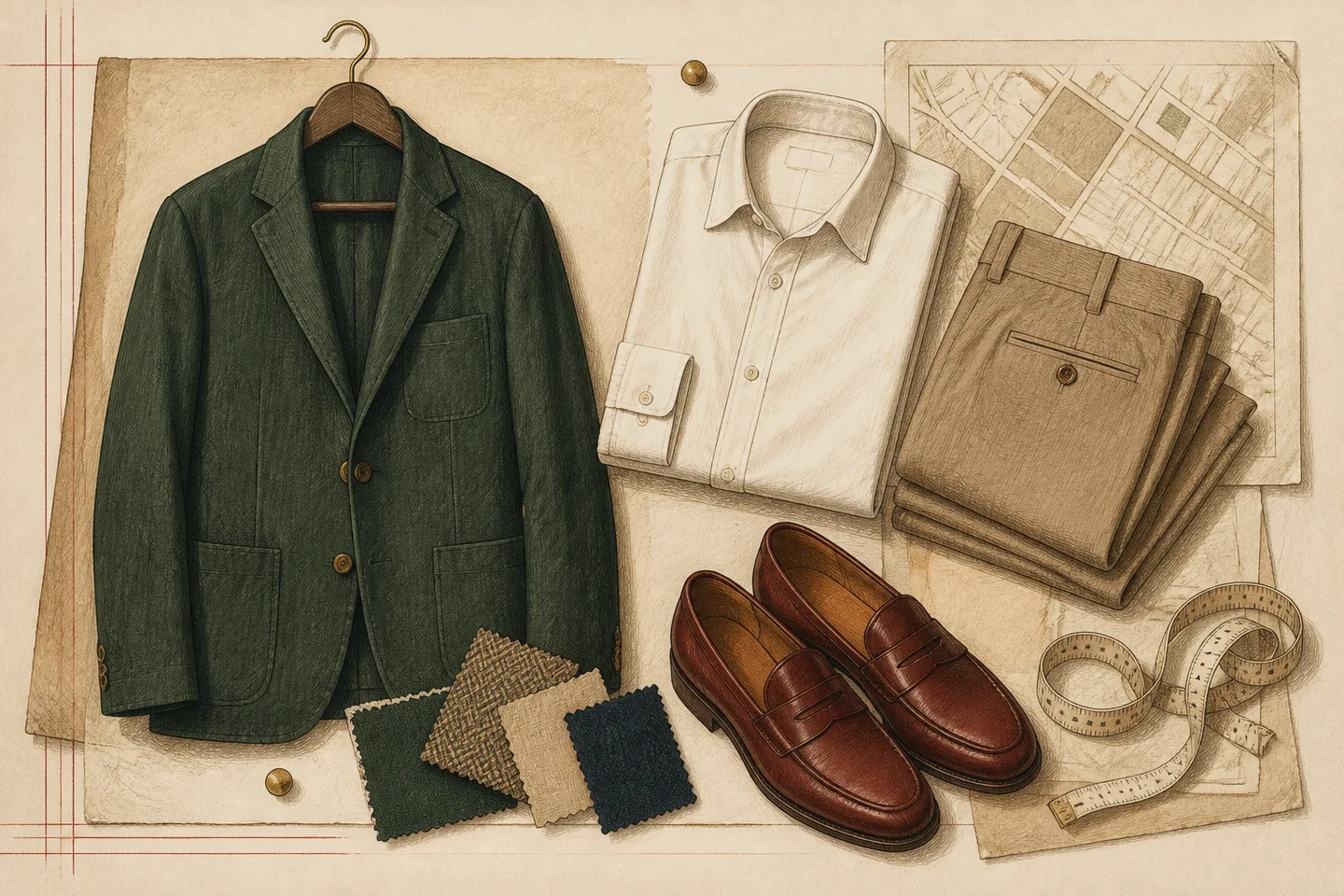
Searching for men's clothing nearby is easier when you know what you need to bring home. The closest shop may be convenient, but it still needs to carry the right garment, size and cut. Start with a specific requirement, then compare local options by fit, fabric, care and usefulness within your existing wardrobe.
A little preparation also makes a fitting more informative. Bring measurements, wear suitable layers and leave enough time to move in the clothes. The aim is to judge how an item will work during an ordinary day, rather than how it looks for a moment in front of a mirror.
Define the garment before choosing a shop
Write down the immediate problem in plain language. “Trousers for sitting at a desk and walking to work” gives you more to assess than “something smart”. A jacket for occasional evening use has different requirements from a layer carried on a daily commute.
Separate essentials from preferences. Essentials might include a comfortable waistband, room for another layer, usable pockets or a care routine you can manage. Colour, pattern and decorative details may be negotiable. Decide which features would make the garment unsuitable, even if everything else looked appealing.
Check what you already own before leaving home. If you are replacing a worn item, note what worked and what did not: sleeve length, pocket depth, fabric feel or the position of a waistband. Take measurements from a comfortable garment laid flat, keeping a note of how you measured it so comparisons remain consistent.
Narrow the local search
Search for the garment and your area together, adding a size requirement or purpose where helpful. “Men’s formal shirts” and “men’s casual trousers” produce a more useful shortlist than a general clothing search. Decide how far you can travel, including the possibility of another visit for collection or an exchange.
Use maps and directories to find possible shops, then check each shop’s own information. A listing for menswear does not confirm that a particular size, cut or item is available. Before making a special journey, ask about the specific category and measurements you need, as well as opening hours and fitting facilities.
Choose the order of your visits around the most important requirement. If finding a suitable length is usually difficult, begin with the shop that can confirm relevant options. A wider selection of unrelated clothing will not help. Keep a short note of promising items so you can compare them without relying on memory.
Check fit through movement
Use the size label as a starting point. Different cuts can fit differently even when their labels match. Try an adjacent size when necessary, but also consider another shape: sizing up may add unwanted fabric without solving a tight shoulder or an uncomfortable rise.
Shirts and upper layers
Fasten the garment as you intend to wear it. Check for pulling across the chest, gaps between buttons and pressure at the upper arms. For a conventional shoulder seam, look at where it sits relative to your shoulder; deliberately relaxed cuts need a different judgement from close cuts.
Reach forward and raise your arms. Notice whether the collar presses, the back restricts movement or the hem rides up excessively. Try a jacket over the layer you expect to wear beneath it. Sleeves should remain practical when you reach for something, and cuffs should not interfere with your hands.
Trousers
Sit down, walk and bend gently. The waistband should remain comfortable while seated, without needing a belt tightened hard to hold it in place. Check for strain across the seat, twisting legs and pockets that gape. Compare the rise as well as the waist measurement when a pair feels wrong.
Assess the hem with suitable footwear. Look at how much fabric gathers above the shoe and whether the back catches under your heel. If shortening seems necessary, ask whether it is feasible before buying. Do not assume alterations can correct every problem with the cut.
Inspect fabric, seams and fastenings
Read the fibre composition, then handle the fabric. Consider its weight, texture and stretch alongside the intended use. A soft feel alone does not tell you how an item will wear, and thickness alone does not establish quality. Check whether the fabric is comfortable against your skin and whether it hangs as you want.
Inspect seams inside and outside the garment. Look for skipped stitches, loose ends, puckering and areas already pulling apart. Test zips and buttons without forcing them. Pay particular attention to pocket openings, belt loops, cuffs and other places you will handle repeatedly. Check that any lining allows comfortable movement.
Labels provide another basis for comparison. FTC apparel and labeling guidance offers a United States reference on clothing label information. Keep that geographical context in mind when using it; examine the information supplied on the particular garment rather than assuming labels follow identical conventions everywhere.
Choose a care routine you can maintain
Read the care label before purchasing, especially for anything you expect to wear frequently. Consider washing, drying, ironing and any specialist cleaning instructions. Ask yourself where you would dry the item and whether its care requirements fit your household routine. An awkward routine can leave an otherwise useful garment unworn.
The official care-labeling rule is a further United States reference for apparel care information. For the purchase in front of you, use the garment’s instructions to identify the practical work involved. If a symbol or instruction is unclear, seek clarification before deciding.
Compare similar items with care included in the decision. A garment that needs a separate cleaning trip may be manageable for occasional use but inconvenient for a weekly rotation. Think about how long it may be out of use between wears and whether you have a suitable alternative during that time.
Check coordination before committing
Picture the item with clothes you actually wear. Identify trousers, shoes or an outer layer that would complete the outfit. If it requires several additional purchases, include those in your decision. An unfamiliar colour can still be useful, but it helps to have a clear combination in mind.
Where possible, compare colours in daylight or neutral light. Look at the whole outfit from the front, side and back. Check proportions as well as shades: the length of a jacket, width of trousers and shape of footwear can change how the combination looks. A photograph of an existing outfit may help you remember details.
Make the final check in the shop
Before purchasing, review the points that are easy to overlook once you have found a comfortable fit:
- Inspect the actual item you will take home for marks, damage and missing fastenings.
- Confirm that its size and care label match the item you tried.
- Ask about any proposed alteration and establish the details before agreeing to it.
- Read the seller’s return and exchange terms, including any conditions affecting altered items.
- Keep the receipt and tags while you make your final assessment at home.
If you remain uncertain, record the garment’s details and the specific concern. Compare another option against that concern, whether it is seated comfort, sleeve length or difficult care. This gives a second visit a purpose and helps you avoid buying simply because you have already spent time searching.